The Acer palmatum 'Bloodgood,' also known as the Bloodgood Japanese Maple, is a striking ornamental tree prized for its vibrant, deep burgundy foliage that lasts through spring, summer, and intensifies in fall. Its delicate, hand-like leaves create a captivating texture in any garden, making it a stunning focal point in both formal and informal landscapes

Guarantee safe & secure checkout
Reaching up to 15-20 feet tall at maturity, this compact tree also boasts a graceful, rounded canopy that brings a touch of elegance to small yards and urban gardens.
Features:
Planting Guide:
The Bloodgood Japanese Maple is a low-maintenance tree that will add year-round interest and vibrant color to your garden with minimal care. Perfect for a striking standalone specimen or as part of a landscaped garden bed.
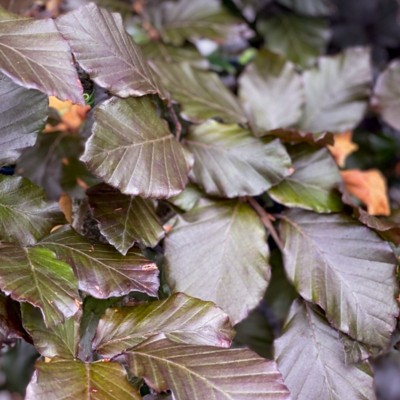
The Fagus sylvatica 'Atropurpurea,' commonly known as Copper Beech, is a majestic deciduous tree famed for its deep purple to copper-colored foliage that creates a stunning presence in the landscape. With a broad, rounded canopy and smooth gray bark, this tree grows up to 50-60 feet tall and 35-40 feet wide at maturity, making it ideal for large gardens or parkland settings. Its striking leaf color shifts to bronze tones in the fall, offering year-round interest and a sense of grandeur.
Carpinus betulus 'Frans Fontaine' (Upright Hornbeam)
A slender, columnar tree perfect for narrow spaces and formal gardens
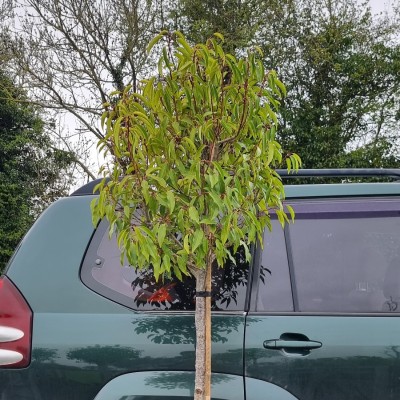
3/4 Standard Portuguese Laurel, a variant of Prunus lusitanica, is a versatile evergreen tree with a well-defined, rounded canopy that reaches three-fourths of its natural mature height. Recognized for its glossy, dark green leaves, this tree is prized for its adaptability to various soil types and its suitability for hedges, screens, or standalone ornamental use. Its dense foliage and year-round greenery contribute to an elegant and formal appearance in gardens or landscapes.
Griselinia littoralis, commonly known as kapuka or New Zealand broadleaf, is a species of flowering plant in the family Griseliniaceae. It is native to New Zealand and is commonly found along the coast and in lowland forests of the North and South Islands.
Suitable for ACRES
Tubex Nature™ Standard Tree Shelter is one of the most popular twin-walled tree shelters to protect growing trees from wildlife damage while supporting tree growth, designed for hard-to-reach areas where collection isn’t possible.
Please note:
Tubex Standard 75cm is suitable for new ACRES scheme
Acer Emerald Queen (Norway Maple)
A majestic specimen offering excellent shade and stunning fall colors
Fagus sylvatica
Also known as European beech trees, are deciduous trees that are native to Europe, Asia, and North Africa. They are known for their smooth, grey bark and their bright green, oval-shaped leaves. Green beech trees can grow to be quite tall, with some reaching up to 120 feet in height. They are also long-lived trees, with some specimens living for more than 300 years. Green beech trees are popular ornamental trees and are often planted in gardens and parks. They are also used in forestry and as shade trees. In the fall, the leaves of green beech trees turn golden brown before falling off the tree
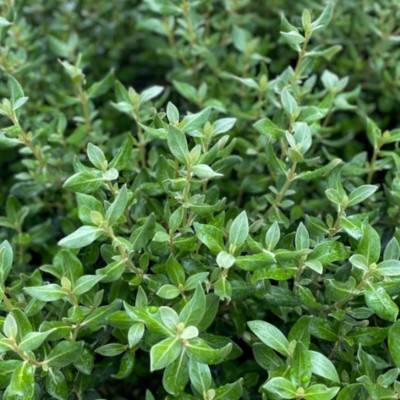
Olearia traversii can be an excellent choice for a hedge, particularly in coastal areas or locations with well-drained soils. Its dense growth habit, attractive silvery-gray foliage, and adaptability to coastal conditions make it a desirable option for landscaping purposes.
Prunus laurocerasus 'Rotundifolia' - Round-leaved Cherry Laurel
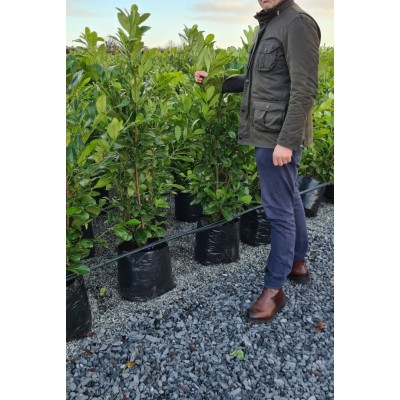
A compact variety of Cherry Laurel with distinctive rounded, glossy dark green leaves that create a dense, formal appearance. This cultivar offers a neater, more manageable alternative to the vigorous common Cherry Laurel, making it excellent for hedging and screening where space is limited.
Bay hedges, or Laurus nobilis, are evergreen hedges with fragrant, dark green foliage that adds both beauty and practicality to any landscape. They can grow up to 20 feet tall, are low-maintenance, and can be easily pruned to maintain a desired height and shape. Bay hedges are popular for their culinary uses and can be used to create natural barriers for privacy, sound reduction, and wind protection, as well as for topiary designs.
Fagus sylvatica
Also known as European beech trees, are deciduous trees that are native to Europe, Asia, and North Africa. They are known for their smooth, grey bark and their bright green, oval-shaped leaves. Green beech trees can grow to be quite tall, with some reaching up to 120 feet in height. They are also long-lived trees, with some specimens living for more than 300 years. Green beech trees are popular ornamental trees and are often planted in gardens and parks. They are also used in forestry and as shade trees. In the fall, the leaves of green beech trees turn golden brown before falling off the tree
Betula pendula also known as Silver birch